

Most of the Blantyre Colliery owners liked to exercise a fairly rigid social control system over their workers, especially if it lined their pockets even more. The colliery managers were usually pillars of the local church as religion was a very real factor in community life and it led to collieries being positioned beside churches of various Christian denominations. The managers frequently provided public halls, where social activities as well as acts of worship could take place.
However, the control they imposed on their employees by far extended beyond social activities. The limepit, stone and coal owners started using the “Truck system” to pay their hard working employees. This was a common practice prior to 1831.
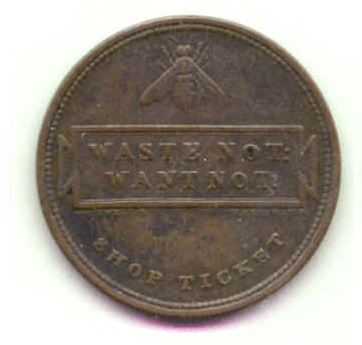
Messrs Merry & Cunningham especially gained a reputation for profiteering by their company shop – their workers paid dearly for the privilege of shopping locally. By 1897, this commercial stranglehold had yielded and Stonefield had developed into a sizeable village with a few public houses and many shops, especially along Glasgow Road.
The Truck system was made illegal under an Act of Parliament dated 1831. However, this legislation was not totally effective. In some areas of the UK including Blantyre, the practice continued on in some scale for a few decades, relying on the common man not being aware of legislation. This included areas South of the border like South Wales coal and iron ore fields, where several ironmasters and coal owners continued to use truck tokens intermittently until the passing of the Truck Amendment Act of 1887. This was despite the fact that in 1830 it had seen protests against the Truck system that had sparked off the infamous Merthyr Tydfil riots. These bloody riots lasted for several days and claimed the lives of many welsh miners not to mention those of several of soldiers dispatched to quell them. The Truck system was deeply unpopular , yet at the time considered a necessity, a bit like electricity prices these days.